
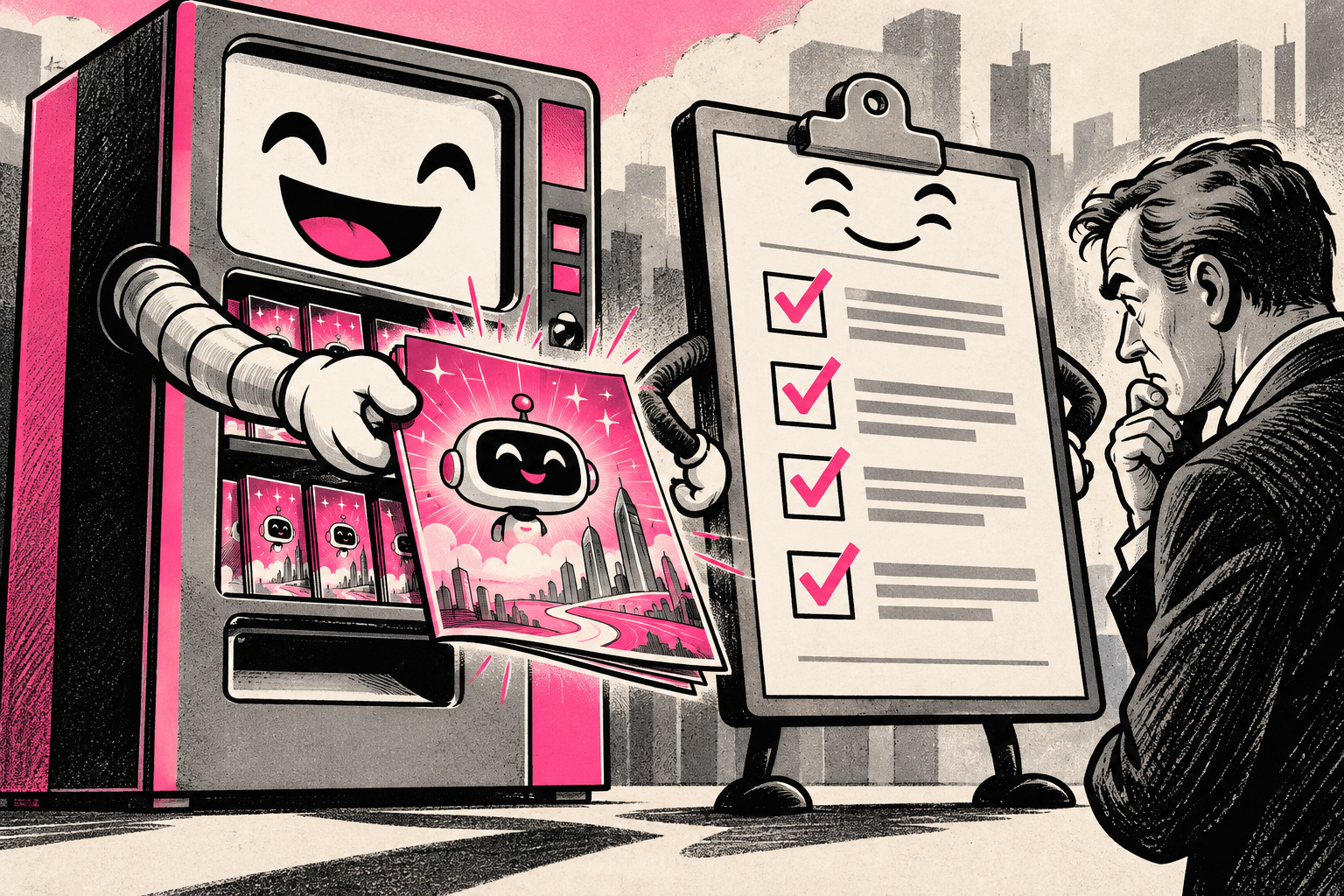
Silicon Valley would like us to admire the speed of the future. Fine. The future can put on a seat belt while we admire it.
On October 14, Iowa’s attorney general announced a consumer-protection lawsuit against OpenAI, joining other states filing separate cases. Reuters reports that the states allege misleading safety claims and harm involving ChatGPT, including risks to young users. These are allegations, not findings that OpenAI is legally responsible for particular injuries.
The Verge obtained a response from OpenAI defending its age-specific protections and describing continued work on safeguards. That response deserves consideration alongside the states’ claims. Neither a complaint nor a company statement completes the factual inquiry.
Show The Work Behind The Reassurance
The useful public question is whether a product’s safeguards match the way it is marketed and the circumstances in which people use it.
A company can sincerely care about safety and still need to demonstrate how its protections perform. Good intentions are not an evaluation method, and a warm sentence on a website is not a testing report.
AI can provide real benefits. That makes responsible design more important, not less. A useful product used by many people needs standards suited to that reach.
For vulnerable users, the difference between an impressive interaction and a reliable one can matter enormously. Product decisions about engagement, tone, reminders, and boundaries should therefore receive serious scrutiny rather than being treated as matters of branding alone.
We should not infer a specific causal story about a person’s harm from a headline. The litigation must establish what happened, which conduct mattered, and whether the applicable law was violated. That is work for evidence and legal process, not a sarcastic blog assigning itself a judge’s robe.
But uncertainty about liability is not an argument against examining the product. It is an argument for doing the examination carefully.
Consumer Protection Is Not An Innovation Allergy
The liberal position I want is neither that every new tool should be prohibited nor that its developers should be excused from ordinary accountability because the demonstration was unusually clever.
A business should accurately describe what its product can do and what protections exist. Regulators should be able to test those representations. Users should have meaningful ways to report problems, and documented failures should inform improvements.
Those expectations should apply across the industry. A company does not become exempt because its executives can deliver an especially moving paragraph about human flourishing.
State officials also need to keep their arguments specific. Dramatic language may draw attention, but the remedy should fit the evidence and the law. Broad technological fears cannot substitute for a demonstrated consumer-protection case.
There is an obvious commercial tension worth discussing without declaring that it proves misconduct: a product may benefit from frequent use while users benefit from appropriate limits. Responsible design should make that tension visible and manageable.
A safeguard that exists should be assessed on how it works. A claim that a safeguard failed should be assessed on what the record shows. Both sides owe the public more than a battle between confident adjectives.
The lawsuits are a significant new development. Their outcome is not known, and the allegations should not be recycled as established facts. The debate can still insist on transparent testing, honest marketing, and enforceable responsibilities.
Innovation is allowed to move quickly. Accountability is allowed to keep up.
If safety is central to the sales pitch, it should be central to the product’s design and evaluation. It is not a premium accessory the public must purchase after discovering why the basic model needed it.