
 By
By Opinion & Satire
The Federal Reserve controls a policy rate, not the soundtrack in a dentist's waiting room. Turning down the volume does not automatically make the experience less stressful.
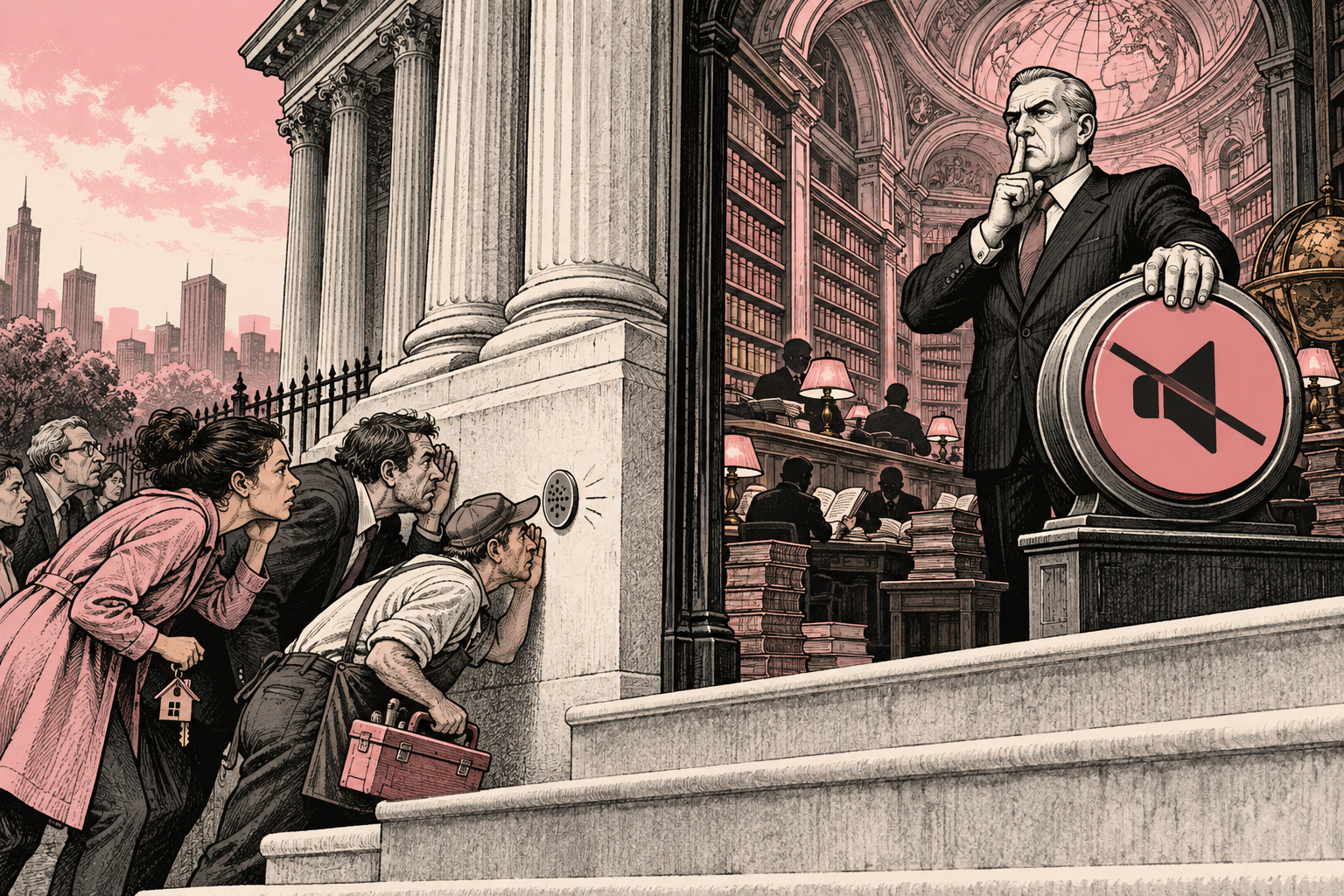
Reuters reports October 15 that Chair Kevin Warsh's preference for a less talkative Fed is meeting resistance from colleagues who see explanation as part of their responsibilities. The communications strategy is still unsettled. A task force expected to consider dropping rate-path projections is not the same thing as a final decision to abolish them.
There is an especially useful primary document behind this debate. In an October 8 speech in Istanbul, Governor Christopher Waller laid out the problem: saying nothing about the expected path of rates can produce surprises and volatility, while promising a rigid path can prevent an appropriate response to new information.
His alternative was conditional signaling—explain the likely direction while retaining flexibility. Those remarks were delivered last week, not this morning. Today's Reuters reporting gives the broader dispute fresh context.
This is not a fight over whether central bankers should launch a daily lifestyle podcast. Please, no. The public has suffered enough.
It is about whether an institution with enormous influence over borrowing conditions should help people understand what it is doing.
Uncertainty Does Not Require A Vow Of Silence
There is a serious argument against excessive guidance. If every projection starts sounding like a promise, markets and politicians can punish officials for changing their minds when the evidence changes.
Nobody should demand a beautifully formatted guarantee about an unknowable economy. A responsible forecast needs conditions, uncertainty and the possibility of revision.
But that argument supports clearer explanation. It does not make explanation pointless.
A weather forecaster can describe the conditions that would change a storm's path without swearing an oath that your picnic will remain dry. A central bank should be capable of a similarly adult conversation.
What evidence is carrying the most weight? What would alter the assessment? Where do policymakers disagree? These are useful questions even when no official can supply an exact answer about the next meeting.
The alternative risks turning public policy into a guessing game in which well-resourced traders hire interpreters and everyone else waits to discover what the latest move means for them.
Some people enjoy an escape room. Fewer enjoy finding out their refinancing plans have been placed inside one.
Independence Needs An Explanation
A liberal defense of central-bank independence should never become a defense of institutional aloofness.
Elected officials should not be able to dictate rate decisions to improve their campaign weather. Equally, independence does not entitle officials to treat public understanding as an unfortunate side effect of doing business.
The strongest defense of an independent institution is a visible process: evidence, disagreement, reasons and accountability for the outcome. That makes it possible to criticize a decision without insisting that every technical judgment become an instruction from the White House.
Communication should also extend beyond the people who trade immediately after a speech. Workers deserve to hear how employment risks enter the discussion. Families should be able to understand the reasoning without first taking a graduate seminar in what a strategically omitted adjective might mean.
More appearances are not automatically better. Repetition, mixed signals and performative certainty can create their own confusion. The goal should be useful public information, not winning the central-banker content calendar.
Warsh and his colleagues have a legitimate policy disagreement to work through. Waller's distinction offers a sensible starting point: guidance can be informative without becoming a contract with the future.
If the data change, explain the change. If the committee is uncertain, explain the uncertainty. If there is disagreement, let the public know what the disagreement concerns.
The Fed does not have to tell us the ending before it happens. It should at least stop making the audience solve riddles to follow the plot.