
 By
By Opinion & Satire
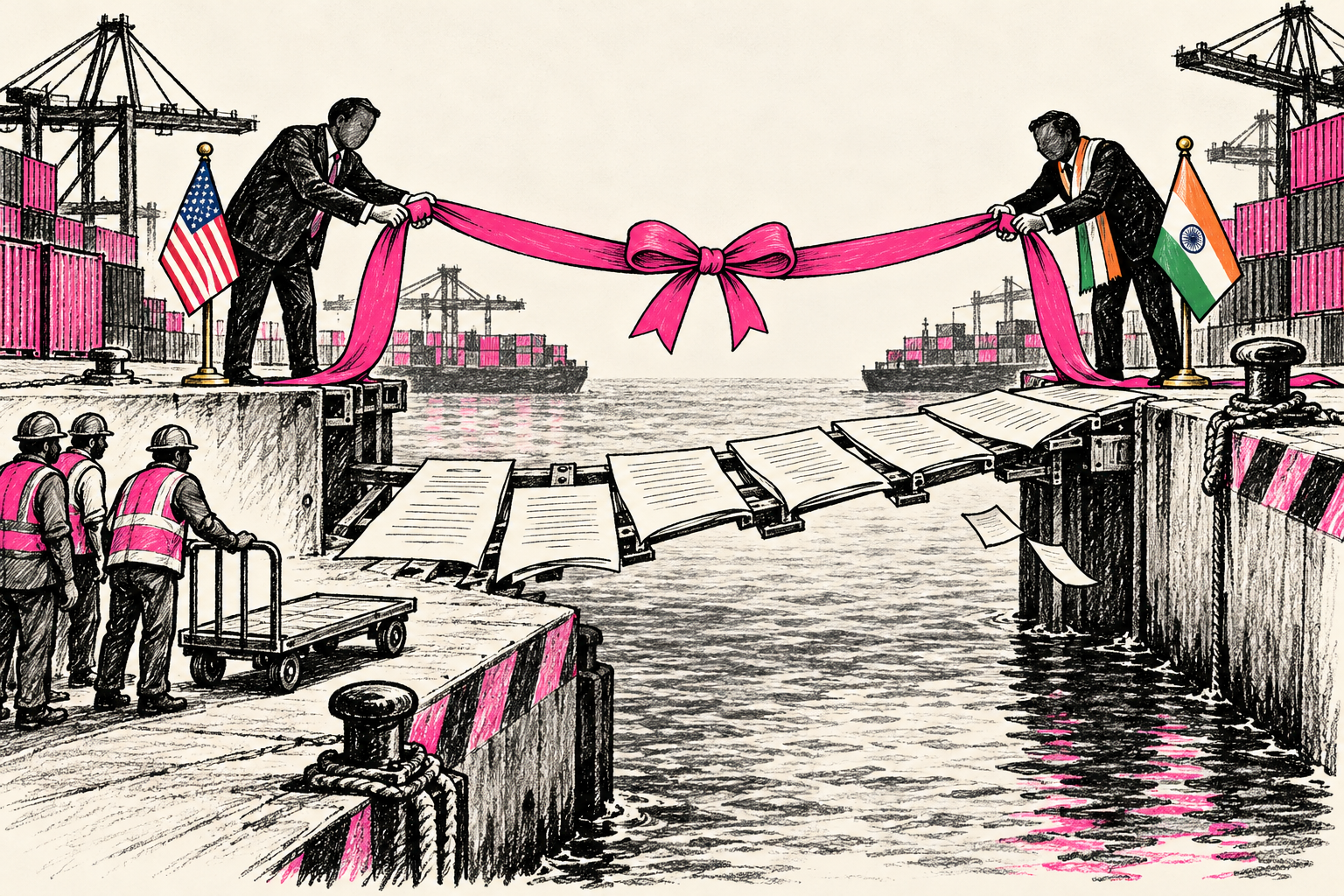
Trade diplomacy has a remarkable vocabulary for the space between an aspiration and a working agreement. Progress is encouraging, the contours are emerging, the framework is promising—and somebody trying to price a shipment would really like to know what the hell applies on Tuesday.
Indian Commerce Minister Piyush Goyal said October 15 that the first phase of a U.S.–India trade pact is undergoing legal drafting and would be operationalized once India obtains a competitive advantage over peer exporters, Reuters reports.
DD India's agency-based account reports the same conditional position and Commerce Secretary Rajesh Agrawal's description of negotiations and drafting still in progress. These accounts describe officials' statements, not a signed, fully implemented agreement.
Financial Express also reports U.S. Ambassador Sergio Gor saying the broad framework and major issues had been worked out while smaller issues remained under discussion.
That is evidence of movement. It is not a reason to invent final tariff schedules, a guaranteed effective date or benefits that the published terms do not yet establish.
The Footnotes Are The Product
Legal drafting is easy to dismiss as the dull interval after the important people have shaken hands. In a trade agreement, the supposedly dull part can determine what the announcement means.
Which goods qualify? What documentation is required? When do changes begin? What exceptions apply? How are disputes handled?
Those are questions to put to any completed agreement, not claims that we already know the answers in this one.
A container does not receive a discount because two officials enjoyed a productive conversation. An importer needs rules that can be applied, and a worker needs a credible explanation of what those rules mean for the job.
Uncertainty is not distributed evenly. Large firms can often pay specialists to interpret changes and model alternatives. Smaller businesses may have less money and time to spend waiting for the next clarification. The political debate should account for that difference rather than assume every company possesses its own trade-policy command center.
Predictability has value. So does being honest about what remains unresolved.
The acceptable response to a draft is neither automatic celebration nor automatic rejection. It is a request to see the terms.
Workers Belong In The Negotiation Too
A liberal trade policy should ask who gains bargaining power, who faces disruption and what protections accompany a change in market access.
That is more demanding than declaring trade good or tariffs strong. Both slogans can conceal an impressive amount of unfinished thinking.
It is reasonable for India to seek advantages for its exporters. It is reasonable for Americans to ask how an agreement serves workers and consumers here. Those aims need not be reduced to a competition over which leader gets the more flattering photograph.
The public should expect an explanation of trade-offs, including effects that may differ across industries. Where adjustment assistance is warranted, it should be specific, funded and usable. Where labor or environmental safeguards are promised, the question is how they will be enforced.
Nobody should claim this unfinished deal has already passed those tests. The point is to make the tests visible before the victory speeches become so elaborate that asking a question seems impolite.
Democrats should offer more than nostalgia for a supposedly frictionless trading world. Republicans should offer more than confidence that pressure automatically produces a good outcome. Governing requires showing the work.
Officials on both sides may ultimately produce a useful agreement. The latest statements are a reason to follow the negotiations closely, not a substitute for evaluating the result.
When the text is available, read it. When implementation is announced, check it. When the benefits are claimed, measure them against the people expected to live with the changes.
Until then, almost done remains a status update. It is a lousy customs instruction.