
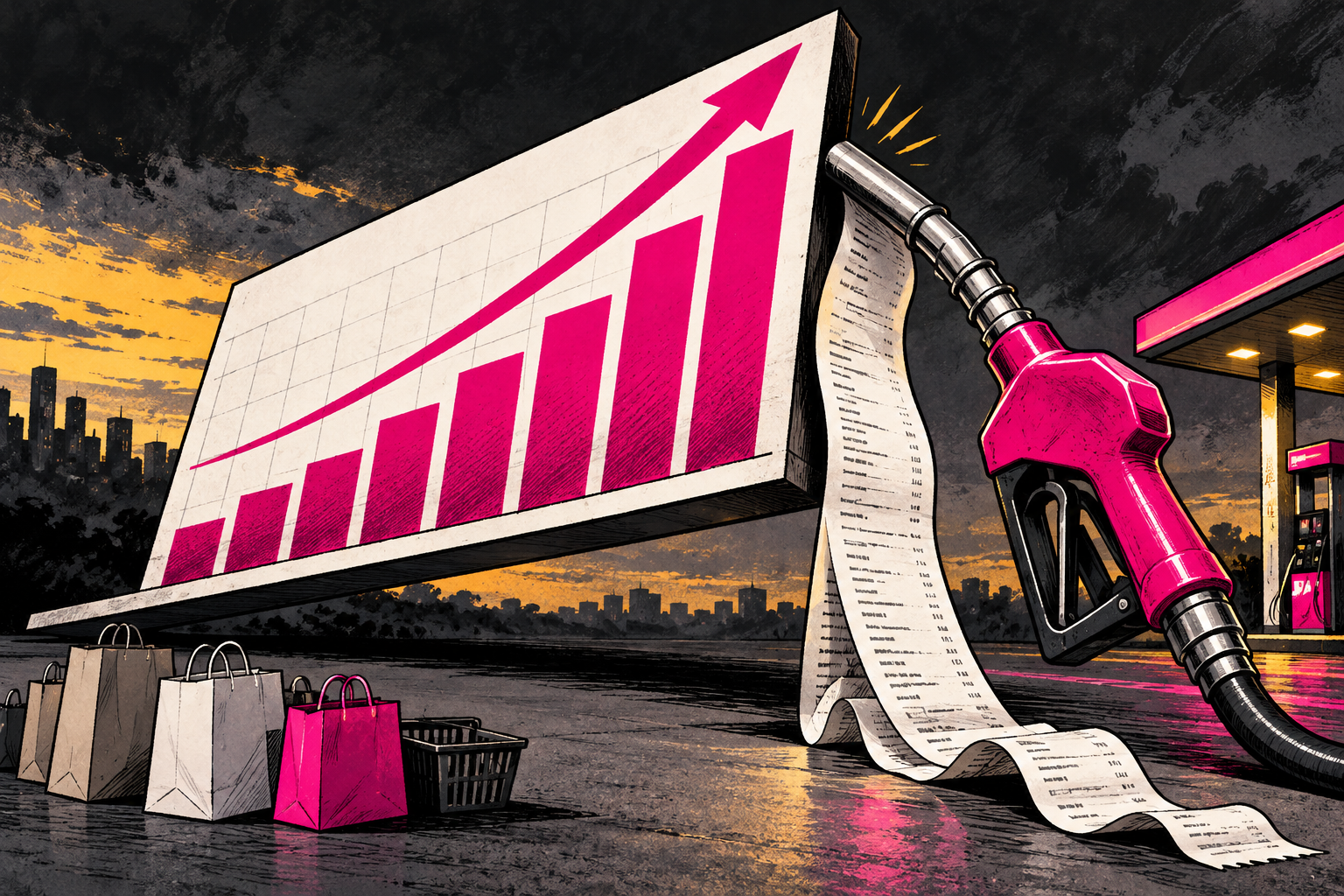
September retail sales arrived wearing a varsity jacket and demanding applause. The headline number rose 0.8% from August, well above the 0.3% economists polled by Reuters expected. Somewhere, a campaign consultant is already turning that into a graphic labeled CONSUMERS STRONG, probably over a stock photo of a woman buying artisanal throw pillows.
Then you read the receipt.
The Census Bureau’s October 15 release says retail and food-service sales reached an estimated $745 billion in September. It also says the figures are not adjusted for price changes. Strip out gasoline stations and the monthly increase falls to 0.2%. Sales at gasoline stations jumped 6.4% from August and 28.1% from a year earlier. Reuters reported that higher gasoline prices accounted for most of the overall gain. This is less a shopping spree than a statistical hostage note from the fuel gauge.
That distinction matters because nominal spending can rise when people buy more things, when the things cost more, or both. A family paying extra to drive to work has technically increased retail sales. It has not necessarily become more prosperous. Calling that resilience without the footnote is like calling a higher hospital bill evidence that the patient is feeling ambitious.
The Consumer Is Not A Bottomless Subscription
Outside the gas station, the report is subdued. The Census Bureau’s total excluding gasoline rose 0.2%. Its broad total excluding both vehicles and gasoline also rose 0.2%. Reuters noted that the narrower control group used to estimate the goods portion of consumer spending edged up just 0.1%, below the 0.3% economists expected.
None of this means the economy has collapsed. It means the headline deserves adult supervision. Consumer spending remains large, layoffs remain relatively low, and some households are still buying. But an economy can post growth while distributing the comfort very unevenly. Higher-income households with stock gains are not the same thing as a cashier deciding whether to fill the tank all the way.
The Federal Reserve’s latest Beige Book, as Reuters noted, found little or no overall change in consumer spending across most districts from late August to early October. Lower-income customers were reported to be more cautious. That squares neatly with a retail report whose biggest booster is the product people often cannot avoid buying.
Count What The Dollar Buys
Politicians love top-line economic statistics because top lines fit on podium signs. Families experience the denominator. They know whether the same paycheck buys the same groceries, commute, medicine and rent. They do not need a briefing to explain the difference between spending more and getting more.
The policy response should match the real problem. Reduce the energy shock instead of congratulating consumers for absorbing it. Protect wages. Make public transit and efficient housing actual options rather than urban-planning folklore. Enforce competition rules where concentrated markets give companies room to pass through every cost increase and then some.
September’s retail report is useful. It tells us Americans kept paying. It does not tell us they enjoyed it, could easily afford it or received 0.8% more life in exchange. When the gas pump is doing most of the economic cheering, perhaps hold the victory banner until after everyone gets home.