
Opinion & Satire
Campaign advertising is one of the few products Americans keep receiving despite having made no discernible effort to order more of it.
Now add an administrative timetable to the machinery deciding how far the advertising money goes.
In its October 14 order in FCC v. Brown, the Supreme Court stayed a Fourth Circuit directive requiring the Federal Communications Commission to decide a challenge within 48 hours. The dispute concerns discounted broadcast advertising rates extended to political parties conducting coordinated activity and certain fundraising committees. The Court's earlier ruling required candidates challenging the policy to await agency review.
The latest order addresses that review timetable, not a final determination that every aspect of the underlying policy is lawful. Justices Sonia Sotomayor and Ketanji Brown Jackson would have denied the applications.
Reuters reports that Republican committees sought the relief alongside the FCC and stand to benefit politically. The legal mechanism is procedural. The practical setting is an election approaching fast enough to make a calendar unusually consequential.
A Deadline Can Change The Outcome Without Settling The Argument
The Court's reasoning deserves to be described accurately. Its opinion says the governing statute does not impose a particular timetable and explains why forcing an agency to abandon an ongoing deliberative process can cause harm.
That is an institutional argument, not a sentence saying Republicans should win elections. We should criticize what the Court actually did, not replace its reasoning with a cartoon confession.
But taking the reasoning seriously does not require overlooking the problem on the other side.
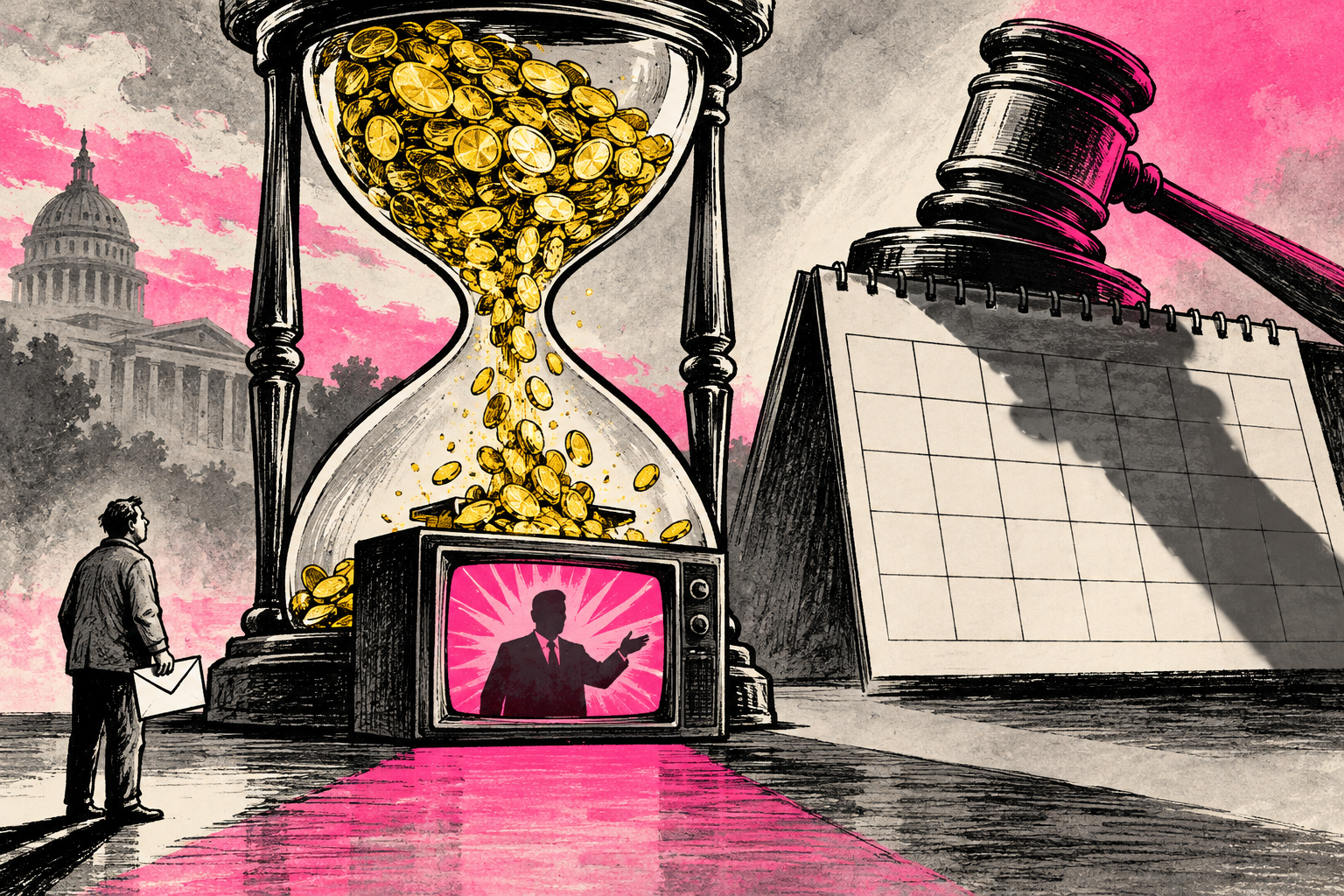
If challengers must wait for an agency's decision before obtaining judicial review, the timing of that decision matters. In an election dispute, a victory that arrives after the election may be a particularly elegant souvenir.
The concern is structural: an agency process can determine which rules remain in effect while the period in which they matter disappears.
That does not mean courts should invent any deadline they like. It means lawmakers should pay attention to whether review procedures can deliver meaningful answers before time-sensitive disputes become academic.
A system can be exquisitely orderly and still leave voters watching consequences nobody has resolved in time.
Cheap Airtime Is Still Power
Discounted advertising rates sound like a technical issue because they are. They are also about who can purchase more access to the public's attention with a given budget.
That is why the details deserve more coverage than a passing reference to election-law housekeeping.
The democratic interest is not in ensuring that one party gets the better bargain. It is in rules that are clear, defensible and reviewed through a process that does not effectively decide the election-season question by running out the clock.
Democrats should be capable of saying that even when an outcome hurts them. Republicans should be capable of saying it when a particular procedural result benefits them. This would be a refreshing development, although perhaps difficult to fit between the attack ads.
Congress has work it could do here: examine deadlines, agency review and the distinction between candidate and party activity without pretending that every complicated question can be solved by declaring the other side corrupt.
The FCC, meanwhile, should explain its process and reasoning clearly enough for people outside the campaign-finance bar to follow. Public confidence is not improved by making the rules governing political speech feel like an airline fare chart.
The Court has given the agency more room to deliberate.
Voters deserve a system in which deliberation leads to a timely answer, rather than becoming the most effective campaign expenditure nobody can see on television.