
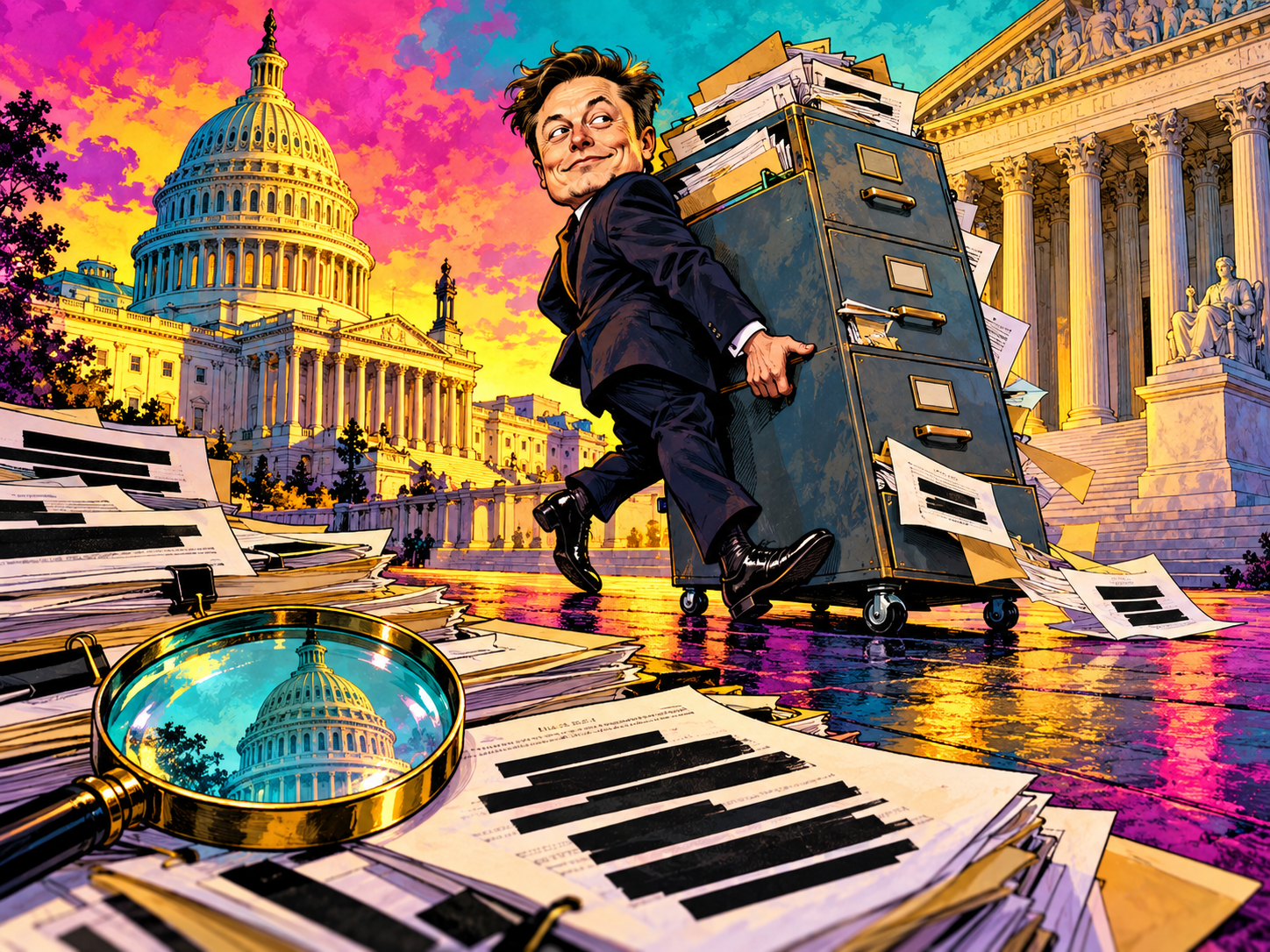
Government efficiency sounds wonderful until you discover the public needs a legal department just to ask what the efficient people did. At that point, the cost-cutting machine starts looking suspiciously like a vending machine that takes your money and dispenses a jurisdictional objection.
On October 13, the Supreme Court agreed to hear the DOGE records dispute. CREW argues the organization falls under federal disclosure rules; the administration describes it as an exempt presidential advisory body. The court has accepted the case for review, not delivered a final ruling on that disagreement. That's the news. The rest is the part where we contemplate how accountability acquired a cover charge.
A Very Efficient Way To Avoid A Simple Answer
Picture hiring someone to reorganize your house. They arrive with a clipboard, make an impressive speech about waste, and announce that the living room has been optimized. You ask what changed. Suddenly, they are merely a household advisory entity, and your request for the furniture inventory raises profound sofa-separation-of-powers concerns.
That analogy is a joke. The underlying standard should be serious: when an initiative becomes a major instrument of presidential policy, the public deserves a meaningful account of its role. Legal categories matter, but categories should help us understand power, not become camouflage for it.
There are legitimate reasons to protect certain government discussions. Nobody needs to livestream every policy brainstorm or publish an employee's personal information. An accountable system can recognize those concerns without treating public curiosity as an attempted burglary. Privacy and transparency both require judgment. A blanket attitude of mind your business requires only a door with a lock.
The Receipts Are Part Of The Job
The liberal argument here is pleasantly boring. Government belongs to the public. People who exercise public power should expect questions about how that power works. You don't need a revolutionary manifesto to arrive there. A receipt from a hardware store will do: money changed hands, somebody did something, and there ought to be a record.
The same principle applies when Democrats occupy the White House. If a Democratic administration builds a high-profile initiative and then retreats into technical distinctions when asked about its operations, liberals should demand answers with precisely the same enthusiasm. Otherwise, transparency becomes a team jersey you wear only when the other side has the ball.
We should also resist the temptation to turn every procedural development into a victory parade or an obituary for democracy. Agreeing to hear a case isn't the same as deciding it. Pretending otherwise creates a very exciting headline and a very confused reader. There is already enough confusion available at retail; we don't need to manufacture more.
Efficiency For Whom?
The larger political question is what counts as efficiency. Saving time for officials while forcing everyone else to spend months seeking an explanation isn't a universal improvement. It's a transfer of inconvenience. The office gets a faster workflow; the public gets a scavenger hunt with filing fees.
A healthy government should be able to explain what it did, why it did it, and which standards governed the decision. That explanation won't settle every argument. It will, however, give the argument something sturdier to stand on than a press release and a personality cult.
For now, the case heads toward further Supreme Court review. The legal questions deserve careful treatment. The political sales pitch deserves a raised eyebrow.
If the government is going to sell us efficiency, the least it can do is avoid making the receipt the least efficient thing in the building.