
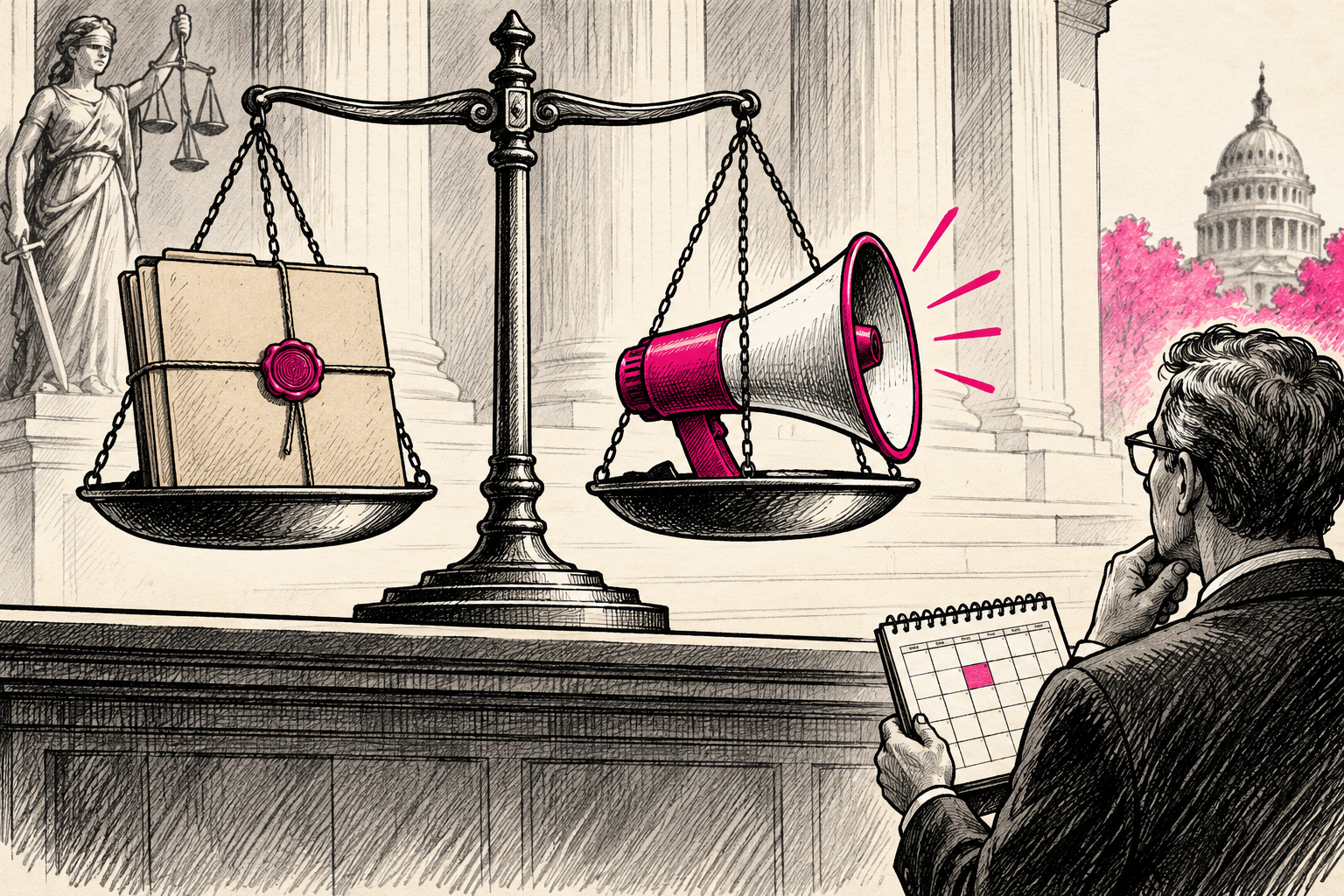
An investigation should discover facts. A campaign should persuade voters. When the two start sharing the same spotlight, the public deserves a better explanation than being told the lighting is purely coincidental.
A Washington Post analysis published October 14 examines election-season safeguards after the search of Ilhan Omar’s home.
AP reported that federal agents searched the congresswoman’s Washington home on October 12 during a criminal investigation. Omar called the action politically motivated. That is her characterization; this article does not establish officials’ motives or assume her guilt or innocence. The search happened Monday, not today.
The Justice Department’s published manual says agents and prosecutors must not choose the timing of investigative actions or statements for the purpose of affecting an election or advantaging a candidate or party. That is a standard concerning purpose, not a blanket prohibition on all investigative work near Election Day.
Evidence And Neutrality Are Both Necessary
Public officials should not receive immunity because an election is approaching. Evidence can require action, and legitimate law enforcement does not become illegitimate simply because the person affected holds office.
The opposite principle is equally important: the power to investigate should not become a tool for manufacturing political advantage. Neither a party label nor a president’s hostility should determine how a case is handled.
That is why the explanation and safeguards matter. A warrant addresses a legal threshold for a search. It is not a conviction, and it does not independently answer every question about how officials chose the moment to act.
Voters should resist the temptation to turn visible enforcement activity into an instant verdict. Boxes leaving a building may make dramatic footage. They do not tell us what the evidence ultimately establishes.
The same restraint applies to claims that an action must be improper. Timing can warrant scrutiny without proving a particular intention. Criticism should ask for the relevant justification and apply consistent standards rather than promote a certainty it cannot support.
The Government Should Not Campaign With Its Powers
My liberal position is that due process and impartial administration protect everyone, including people whose politics I dislike. A standard that exists only for allies is a favor, not a civil liberty.
That makes the conduct of senior political leaders especially important. They should avoid language that turns an unresolved investigation into a performance for supporters. The ordinary public interest is in finding the truth under fair rules, not generating a gratifying sequence of clips.
Investigators likewise need the space and safeguards to do their work professionally. Protecting that independence should be treated as competent government, not an annoying obstacle to leadership’s preferred narrative.
Democrats should defend those principles when a Republican is investigated. Republicans should defend them when a Democrat is investigated. This is not an especially exotic bargain. It is the minimum needed to keep public power from functioning like an expensive opposition-research department.
The public also needs careful journalism. Report what occurred, distinguish allegations from findings, and make the timeline clear. An analysis of election-season norms should not be sold as a new criminal charge or proof that a suspected offense happened.
Today’s debate is an opportunity to insist on those distinctions. We can demand lawful investigation and scrutinize the political handling of it at the same time. We do not have to choose between ignoring evidence and treating government action as automatically beyond question.
The eventual record, not our preferred storyline, should establish what the investigation proves. Until then, a search warrant is not a campaign verdict, and justice should not need a campaign manager.